Six weeks, one to one
It’s six weeks of sitting down with somebody who’s been where you are, working out what actually fits the brain you’ve got rather than the one the systems were built for.
If you’re here, you’ve probably already read everything. The books, the videos, the app that was going to sort it, the system that worked beautifully right up until it didn’t.
So this isn’t more information. You’ve got plenty of information.
The shape of it
Six sessions, one a week, an hour each, on Zoom. You can do it from your own kitchen table.
Before the six start, we have a longer conversation, about seventy-five minutes, to set the tone and work out where to begin. It’s more of a mix of coaching and mentoring than the weeks that follow, and it’s the one where you get to tell me the whole thing without me stopping you.
Then, after the six weeks, we meet again at one month, at three months, and at six months. Those three are part of it. They’re not an upsell and there’s nothing to buy at the end of them. I’ve simply agreed to still be here in six months, because that’s when this either sticks or quietly stops, and it shouldn’t be the point where you’re on your own.
Week by week
Each week has a shape, though the shape bends to whatever you bring.
01
Your ADHD story
What this has actually been like. Not the symptom list, the story. I mostly listen in week one.
02
Executive functioning
Executive function is the brain’s management system: the part that plans, starts, remembers, organises and regulates. We take whichever bits of it have given you the most trouble and look at them as mechanics rather than as character.
03
From shame to self-compassion
The things you’ve been saying to yourself for forty years, and where you learned to say them. This is usually the hardest week, and the one that stays with people longest.
04
Reframing your brain
ADHD as a neurotype rather than a fault. A neurotype is simply a kind of brain, in the way that left-handed is a kind of hand. Dr William Dodson’s description of an interest-based nervous system is useful here, and we’ll look at whether it fits you.
05
Working with your brain
The practical week. Systems that remember for you, environment design, and body doubling. Body doubling is working alongside somebody else, in the room or on a call, without them helping. For a lot of us it’s the difference between starting and not starting.
06
What next
We pull it together and finish your Lifebook.
I think of this one as a decision portal. A door you can go in and out of. Most people assume the last of those doors is somewhere back in their twenties, and I don’t believe that. Week six is about what you’d walk through the next one for.
The Lifebook: what you leave with
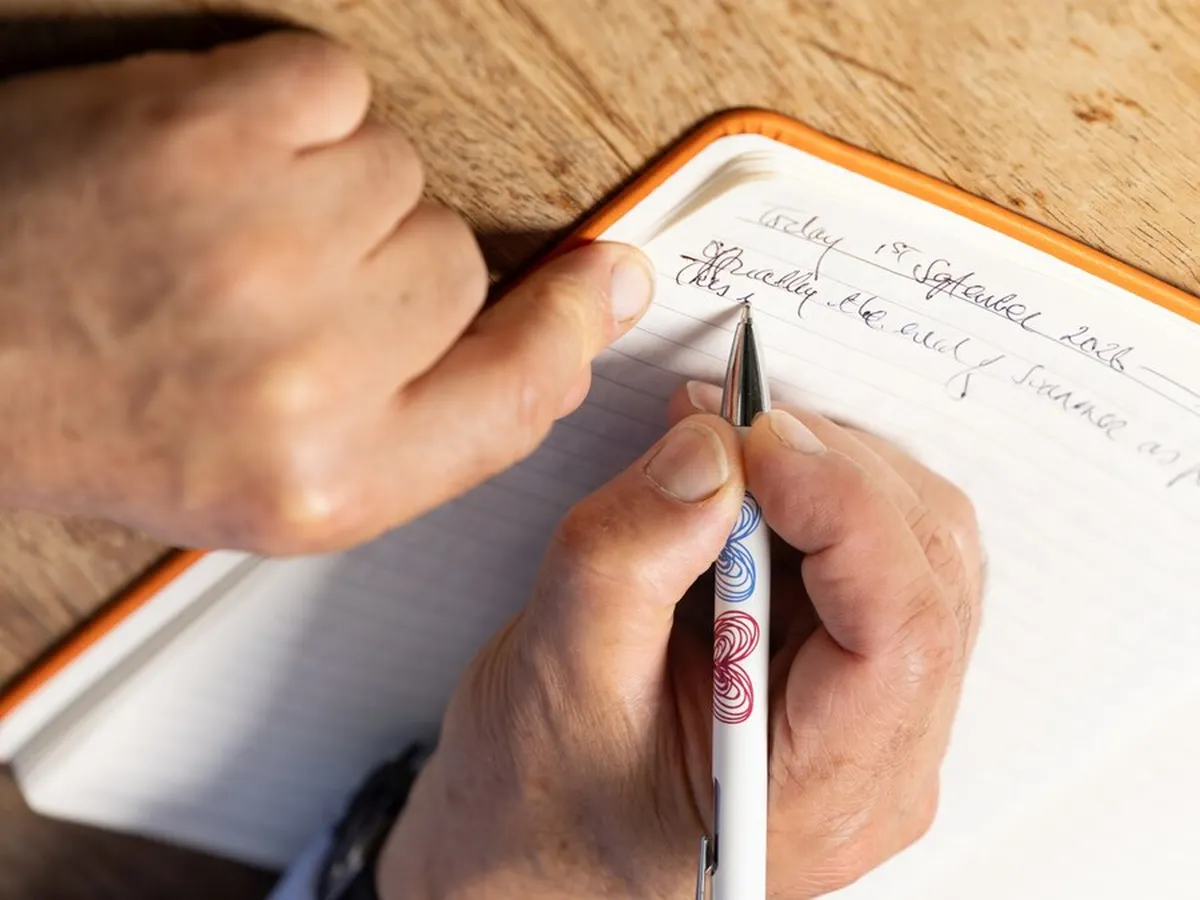
By the end you’ve got a real document, not a worksheet pack.
It holds what we worked out about how your brain runs, the patterns you recognised, what helped and what didn’t, and what you want to do with the next stretch. We build it as we go and finish it in week six.
It’s yours to keep and to show to whoever you choose. I keep brief working notes between sessions so I can hold the thread from one week to the next, and I’ve set out what happens to those on the questions page.
Which of the two is you
There are two ways to work with me. This is the whole difference.
| The six weeks | Access to Work | |
|---|---|---|
| Who it’s for | Anyone, working or not | People in paid work |
| What it’s about | Making sense of the decades that came before | Work. What gets in the way, and what would help |
| How many sessions | A longer first conversation, six weekly sessions, then follow-ups at one, three and six months | Twelve weekly sessions |
| What it costs you | £500 | Nothing. The grant pays |
| Affects other benefits | No | No |
| Do you need a diagnosis | No | No |
What the six weeks cost
£500 for the six weeks, including the longer first conversation and the three follow-ups.
You can pay in one go, or split it into two payments. Whichever is easier.
That’s the whole price. No assessment fee, no materials cost, nothing to buy afterwards.
If you decide after the first session that it isn’t for you, you get your money back in full. After that you pay only for the sessions we’ve actually had.
If you’re in work, there’s a grant for this
If you’re in paid work in England, Scotland or Wales, Access to Work may fund coaching. It’s a government grant, you don’t pay it back, it doesn’t affect your other benefits, and you don’t need a diagnosis to apply. If you’re self-employed there’s a turnover threshold, and Northern Ireland runs a separate scheme.
It’s a different programme from the six weeks above. I’m already delivering it.
Access, captions and adjustments
Sessions are on Zoom with live captions on by default. If you’d rather have them off, say so and they go off.
If you need something else to make the hour work, tell me when we speak and we’ll sort it. That’s a normal conversation, not a favour.
Before you commit to anything
We have twenty minutes before anything starts. It’s free, it isn’t part of the six weeks, and I’m not going to sell you anything in it.
I’ll tell you what the six weeks involve and you can ask whatever you want. Then we both decide. Either of us can say no at the end of it, and if it’s you, that’s genuinely fine. A no is useful and I won’t chase you.
If you’d like the twenty minutes, email me and we’ll find a time.
Who this is not for
Coaching isn’t therapy. I’m not a therapist and I’m not a clinician. If what you’re carrying needs somebody with different training, I’ll say so, and I’ll say it early rather than six weeks in.
I don’t diagnose either, and I can’t tell you whether you have ADHD. If you’re somewhere in the middle of that question you’re welcome here, but the answer won’t come from me.
And if what you’re after is getting more done, faster, there are good people who do that work. I’m not one of them.
I’d rather send you to somebody better placed than keep you here.
Questions people ask before they book
Do I need a diagnosis?
No. Not for the six weeks, and not for Access to Work either. Plenty of people arrive somewhere in the middle of finding out.
How is this different from therapy?
Therapy tends to work backwards, into where something came from. Coaching works forwards, into what you do now. There’s overlap, and honestly some weeks sit closer to therapy than others. If the balance tips, I’ll tell you.
Am I too old for this?
I was sixty-one when I found out, and I’ve decided I’m working until I’m eighty-four. There’s a longer answer to this on the questions page, because it’s the question I’m asked most and it deserves more than a line.
What if I miss a week?
We move it.
What if I want to stop?
If you decide after the first session that it isn’t for you, you get your money back in full. After that you pay only for the sessions we’ve actually had.
What happens to what I tell you?
It stays with me. I keep brief working notes so I can hold the thread between sessions. There’s one limit: if I believed you or somebody else were at serious risk of harm, I wouldn’t keep that to myself, and I’d tell you I was worried first.
I am not behind.
I am becoming.